Ask ten Canadian marketing teams what makes their brand different, and most will reach for the same handful of words: authentic, innovative, customer-first. You can ask an AI writing tool to compose their ‘About’ page, and it will also come up with almost the same words; it’s what it was programmed to generate.
That’s not a coincidence, but a whole problem hiding in plain sight. Scroll through five Canadian brand pages right now: LinkedIn, Instagram, a homepage or two. Do you notice anything? The headlines share a rhythm. The captions ask the same rhetorical questions. The visuals lean on the same fonts and the same purple-to-teal gradient every brand apparently discovered independently, in the same month.
AI in digital marketing has truly done something useful: it has made it faster, cheaper, and more accessible than ever in marketing history. It’s also managed to make some brands sound like it’s the same brand, albeit with a different logo, for some pretty uncomfortable count.
That is not a reason to panic about artificial intelligence in marketing. It’s a reason to ask a sharper question, one every Canadian marketing team should be sitting with in 2026: when everyone has access to the same AI tools, where does an original idea actually come from?
The Rise of AI in Canadian Marketing
AI was not incrementally adopted in Canada. Its adoption grew about threefold in two years. The Canadian Survey on Business Conditions by Statistics Canada indicates that 19.2% of Canadian businesses employed AI in the second quarter of 2026 to create goods or services.
The adoption gap by company size is narrower than most marketers assume. Businesses with 100 or more employees lead at 27.8%, but businesses with just one to four employees aren’t far behind at 19.9%, according to the same Statistics Canada data. The real divide isn’t access to AI. It’s attitude: 41.4% of the smallest firms say AI simply isn’t relevant to what they do, compared with 21.3% of the largest ones.
Marketing has adopted AI ahead of the broader Canadian economy. An AI Readiness Survey found that 74% of CMA members use generative AI tools at least weekly at work, outpacing the average for Canadian knowledge workers more broadly.
Marketers, in other words, aren’t lagging. If anything, Canadian marketing teams are ahead of the curve. That’s exactly what makes the next problem worth taking seriously.
What AI Genuinely Gets Right for Marketers
First, let’s acknowledge the positive side of AI-driven content and marketing automation: it is very much possible. AI has reduced the time for research from days to just minutes. It writes pre-notable first drafts of ads, identifies trending trends in your customers’ data that no Tuesday afternoon team of humans could have, and allows a tiny marketing team (the one most Canadian small and mid-sized businesses operate with) to work at a pace that used to require a whole department.
None of that is the problem. A tool that removes friction from research, drafting, and production is simply a good tool. The trouble starts somewhere else.
The Ox, the Crowd, and the Loss of Independent Thinking
In 1906, statistician Francis Galton established a mini-experiment at an English country fair. A bunch of 800 people made an estimation of the weight of an ox, and most of them did not have any knowledge in the field. Individually, the guesses were often wildly inaccurate. Averaged together, the crowd landed remarkably close to the real number, one of the founding stories behind “the wisdom of crowds.”
The part that makes the most sense in this example is that the trick only works when the guesses are independent. The average makes sense because there are 800 different wrong answers. Without independence, you will not get wisdom. You get an echo.
Pattern Replication in the Canadian Market
It’s a fair representation of what will happen with digital marketing trends in 2026. Thousands of brands, including Canadian brands, are asking these few foundation models for almost the same instructions and producing very similar statistical middle results. Not wrong, exactly. Just plain ordinary, in a very similar fashion. The odd phrasing, the unconventional idea, the sentence that doesn’t sound like it came from a template, these were the things that use to make marketing memorable. They are also the first to be “smeared out” when every brand’s AI is trained on the same portion of the internet.
The Double-Edged Sword: AI's Effect on Marketing
The productivity case is real and Canadian-specific: 74% of Canadian Marketing Association (CMA) members use generative AI on a weekly basis, and the most common business use cases (analytics, text processing, chatbots) all point toward genuine efficiency gains rather than gimmicks.
The trust case is just as real. According to a research report, 43% of Canadians say they’re less likely to trust an ad once they know it was created using AI.
People feel that AI-driven personalisation is invasive. The same report found that 69% of Canadians say humour, emotion, and entertainment, precisely the qualities AI tends to flatten, are what make ads memorable in the first place. So, if the audience isn’t able to feel the connection in any possible way, they are likely to ignore all of it.
The Real Problem is What Marketers Stopped Doing
AI didn’t make marketing generic. Marketers letting AI replace strategic thinking, instead of assisting it, did.
There’s a meaningful gap between using AI to speed up execution and using it to skip the part where a brand decides what it actually wants to say. When that happens quietly and repeatedly across a content calendar, brand voice erodes without anyone noticing, because each individual post still looks fine in isolation.
Canadian consumers are quick to notice. Interestingly, the real trust issue usually isn’t AI use itself, it’s the sense that nobody was actually at home with whatever that is being shared with them.
Canadians are rejecting the flattened, emotionless version of marketing that heavy AI reliance tends to produce.
When "More Content" Stops Meaning "More Attention"
Marketing automation lets a brand publish more often, in more formats, at a lower cost per piece than ever before. For a while, that looked like an advantage.
But marketing has never really competed on volume. It competes on attention, and attention flows toward what’s specific, not toward what’s simply present. A Canadian professional services firm publishing twice as much content this year, using the same AI tools as everyone else in its sector, isn’t twice as visible. It’s often just twice as forgettable.
What Still Makes a Brand Different in 2026
If the AI tools are shared, human creativity in marketing has to live somewhere else.
Increasingly, it lives in things AI can support but can’t originate. For example, a genuine point of view, first-hand experience with the Canadian market and its regional quirks, cultural fluency, and the willingness to make a creative call that isn’t the statistically safest one.
There’s evidence that this pays off. Brands that are willing to show real people making real decisions, rather than a polished, anonymous “brand voice,” consistently see stronger engagement than standard promotional content. The tools have become a commodity. Taste hasn’t.
The Next Advantage Is Being Less Generic
For the past two years, the question in every Canadian marketing meeting has been some version of “how much can AI help us create?” That question has basically been answered, and everyone landed on roughly the same answer.
The more useful question now is what a brand creates with AI that still feels unmistakably its own? And the answer is having the story only your team could tell, the opinion only your brand would risk having, the campaign nobody else in your industry would have shaped quite that way.
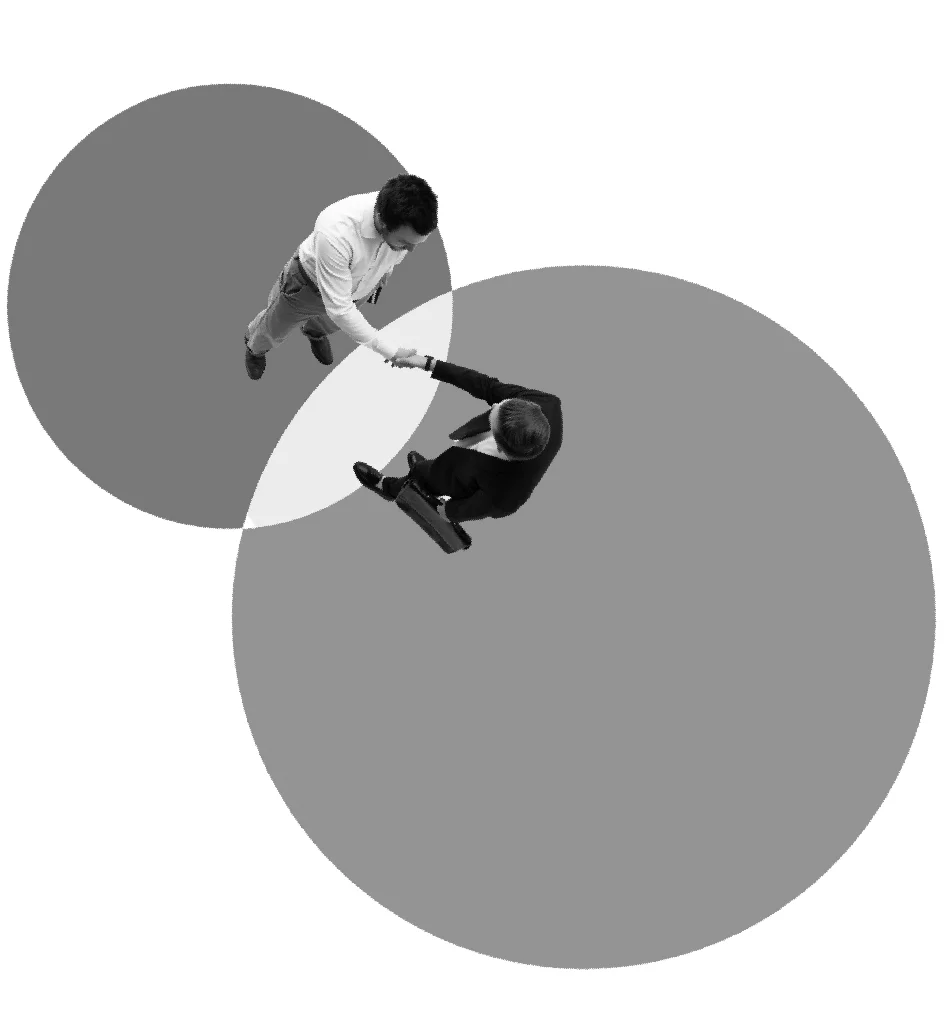
800 fairgoers once guessed their way to a surprisingly accurate answer, because no two of them were thinking alike. Marketing doesn’t need 800 brands thinking alike either. It needs a few willing to guess differently.
Conclusion
AI in digital marketing isn’t a fad that should be considered to be going anywhere anytime soon, and it shouldn’t. It has genuinely made Canadian marketing teams faster, leaner, and more capable than they were even two years ago. But speed was never the scarce resource in marketing. Attention was, and attention still goes to whoever sounds like themselves.
That’s the gap Faber Cre8tive is created to close. We use the same AI tools everyone else has access to, but we don’t let them make the decisions that actually matter for marketing.
We know what a brand stands for, what it’s willing to say, and what its audience should feel a beat after they see it. Our team pairs that thinking with the craft to execute it across web, content, social, and everything in between, for Canadian businesses that would rather be remembered than merely present. That’s the difference between a brand that publishes and a brand that lands.
AI can help you create more marketing. Faber Cre8tive helps you make the marketing Canadians actually remember. If your content has started to feel like it could belong to anyone, let’s talk about making it unmistakably yours again.