



Search
People also search for:
What Are Google Penalties? 8 Google Penalties & How to Fix Them
- Home
- What Are Google Penalties? 8 Google Penalties & How to Fix Them
What Are Google Penalties? 8 Google Penalties & How to Fix Them
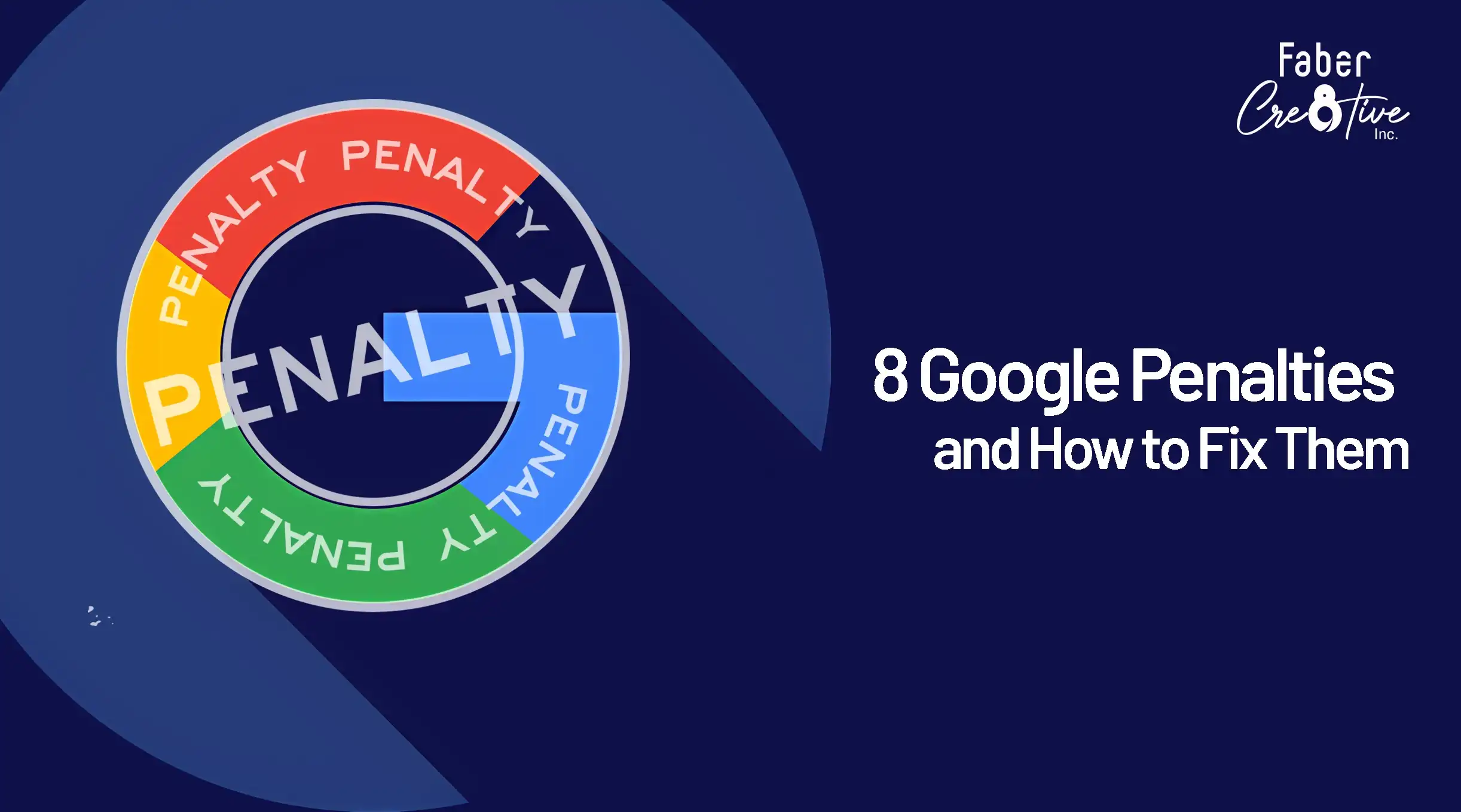
Table of Contents
Recent Post
Follow Us Here
Learn about the most common Google penalties, why they happen, and how to fix them to protect your rankings, traffic, and online visibility.
Yesterday your website was generating leads. Today, it’s practically invisible.
That’s the reality for businesses that are hit by Google penalties. A single violation, whether it’s an unnatural backlink profile, thin content, or a technical SEO issue, can dramatically reduce your visibility in search results. The challenge is that many business owners don’t realize there’s a problem until enquiries slow down and revenue starts to follow.
Understanding why Google issues penalties and how to recover from them is essential if you want to protect your rankings, maintain your online reputation, and keep organic traffic growing.
Google processes billions of searches every day, and its goal is simple: deliver the most relevant, trustworthy, and helpful results to users. Websites that attempt to manipulate rankings or provide poor user experiences can lose visibility, traffic, and ultimately, revenue.
The good news is that most Google penalties are preventable, and many can be reversed with the right strategy.
In this blog, we’ll explain what Google penalties are, the most common types of penalties, why they happen, and how to recover without compromising your long-term SEO success.
What Are Google Penalties?
A Google penalty is a reduction in a website’s visibility within Google’s search results because the site violates Google’s Search Essentials (formerly Webmaster Guidelines) or fails to meet Google’s quality standards.
Google penalties generally fall into two categories:
- Manual penalties: Determined by a human who reviews your website to see that it is in breach of Google's guidelines.
- Algorithmic Penalties: These are penalties that are applied by Google's algorithms, such as spam, low-quality content, or anything that they consider a deceptive tactic.
Google penalties affect traffic and rankings more so than temporary ranking dips and can be difficult to recover from since corrective action must be taken before the ranking changes.
Why Google Penalties Matter
Search visibility is one of the most valuable assets a business can have. When your rankings disappear, so do many of your opportunities to generate leads, sales, and brand awareness.
Google penalties can lead to:
- Significant drops in organic traffic
- Loss of qualified leads
- Reduced online credibility
- Lower revenue from search
- Difficulty competing against better-optimized competitors
Recovering from a penalty is possible, but prevention is almost always faster and more cost-effective than repair.
8 Common Google Penalties (and How to Fix Them)
1. Manual Action Penalty
One of the most serious Google penalties is a manual action.
Instead of an algorithm automatically adjusting your rankings, a Google reviewer determines that your website violates search guidelines. Manual actions typically appear in Google Search Console and specify the issue that needs to be resolved.
- Common causes
- Spam content
- Cloaking
- Hidden text
- Unnatural backlinks
- User-generated spam
- Thin affiliate pages
- How to fix it
Your first step is to identify all the problems in Search Console. Eliminate or fix the errors, note changes in your report, and request reconsideration for changes.
2. Unnatural Link Penalty
Backlinks remain one of Google’s strongest ranking signals, but only when they’re earned naturally.
Buying backlinks, participating in link exchanges, or using private blog networks (PBNs) can trigger a penalty that significantly reduces your site’s authority.
- Warning signs
- Sudden ranking decline
- Large numbers of irrelevant backlinks
- Spammy referring domains
- Aggressive anchor-text optimization
- How to fix it
Perform an in-depth backlink analysis. Remove bad links, disavow harmful links that you cannot remove and focus on high-quality editorial links through valuable content and digital PR.
3. Thin Content Penalty
Having hundreds of pages doesn’t necessarily boost your search engine’s optimization. If your pages don’t offer any value, repeat another page, or don’t answer the users’ questions, Google will make them less visible.
Examples include:
- Doorway pages
- Automatically generated content
- Low-word-count service pages
- Duplicate location pages
- Empty category pages
- How to fix it
Enrich all key pages with original thoughts, useful content, images, answers to frequently asked questions, examples and expert information that really assists readers. It is better to have quality than quantity.
4. Keyword Stuffing Penalty
Some years back, repeating the same keyword dozens of times was effective for improving rankings. Nowadays it typically does the opposite.
Excessive use of keywords makes the content hard to read and appears to be manipulative and not relevant.
Do not write for search engines; write for people.
- Example
Poor:
We provide the best digital marketing agency services because our digital marketing agency offers digital marketing agency solutions.
Better:
We support businesses in their growth through strategic SEO, web design, branding, and digital marketing campaigns tailored to their goals.
- How to fix it
Incorporate keywords in a natural way throughout the headings, introductions, image descriptions, and supporting text. Focus on readability, not on keywords.
5. Spam Content Penalty
There are now more advanced spam detection features that Google is implementing. Pages which are created just to rank and not with any useful content tend to get harder to see over time.
Common examples include:
- AI-generated content published without editing
- Scraped content
- Hidden redirects
- Automatically translated pages
- Mass-produced articles with little originality
- How to fix it
Review your content from the reader’s perspective.
Ask yourself:
“Would someone genuinely find this useful if search engines didn’t exist?”
If the answer is no, rewrite it.
Some of the best indicators of credible content are original expertise, real examples, and first-hand insights.
6. Cloaking and Sneaky Redirects
Cloaking takes place when search engines are presented with different content than the human visitors. Likewise, a sneaky redirect leads users to a different location than where Google indexed the page.
Such practices are done with the intent to mislead search engines and are considered serious violations.
- How to fix it
Ensure both users and search engines see the same content. Remove deceptive redirects and follow transparent website architecture practices.
If redirects are necessary, for example, after redesigning your website, use standard 301 redirects appropriately.
7. Core Update Quality Loss
Not every ranking drop is a manual penalty.
Google releases broad core updates several times each year, rewarding websites that provide stronger expertise, better user experiences, and higher-quality information.
If the competitors improve while your content is not updated, it may be possible that your ranking drops.
- How to fix it
Rather than looking for shortcuts, improve your website holistically by:
- Updating outdated content
- Demonstrating expertise
- Improving page experience
- Increasing topical authority
- Strengthening internal linking
- Publishing genuinely helpful resources
SEO is not a one-time process; it’s a long-term investment.
8. Poor User Experience Signals
Google increasingly rewards websites that deliver positive user experiences.
Friction points for visitors include slow loading when accessing a site, distracting pop-ups, absence of mobile usability, and confusing navigation.
If users leave your site quickly because it’s hard to use, that’s likely to impact the performance of your search.
- Common UX issues
- Slow page speed
- Poor mobile responsiveness
- Difficult navigation
- Excessive ads
- Confusing layouts
- Broken links
- How to fix it
Concentrate on creating a user-friendly website. Optimize for faster loading times, easier navigation, mobile optimization, image compression, and natural navigation paths that lead visitors to your call to action.
Signs Your Website May Have Been Penalized
However, not all traffic drops are due to a Google penalty. Rankings can also fluctuate as a result of seasonal demand, increased competition, or website changes. These are, however, indicators to watch for:
- A sudden, significant drop in organic traffic.
- Multiple keywords disappear from search results.
- Pages that previously ranked well are no longer indexed.
- A manual action notification appears in Google Search Console.
- Organic leads and enquiries decline without another obvious explanation.
- Broken links
If you notice several of these signs at once, it’s worth performing a comprehensive SEO audit to identify the root cause.
What We Commonly Find During SEO Audits
Many business owners assume a drop in rankings means they’ve received a Google penalty. In reality, that’s only one possibility.
Design is the silent salesman that works when you aren’t in the room. It is the foundation of the trust you build with every single client. In a market where competition is just a click away, the brands that invest in powerful, functional design are the ones that don’t just get seen, they get chosen.
- Outdated content that no longer matches user search intent.
- Multiple pages competing for the same keyword.
- Broken internal links and orphaned pages.
- Slow page speeds and poor Core Web Vitals.
- Thin service pages with little original value.
- Inconsistent metadata and missing structured headings.
- Low-quality backlinks from previous SEO campaigns.
- Technical issues preventing Google from properly crawling or indexing pages.
Addressing these problems doesn’t just reduce the risk of Google penalties; it creates a stronger, more user-friendly website that’s better positioned to earn sustainable rankings.
How to Prevent Google Penalties
The first rule of recovering from a Google penalty is to avoid one in the first place. Google’s algorithms are changing, but their mission is unchanged, i.e. to boost websites that give a positive user experience and content that is helpful and trustworthy.
There are a number of best practices that can go a long way:
- Create content for people first. Every page should answer a real question or solve a genuine problem, not simply target a keyword.
- Earn backlinks naturally. Invest in valuable content, industry partnerships, and digital PR rather than buying or exchanging links.
- Keep your website technically healthy. Regularly monitor broken links, crawl errors, page speed, and mobile usability.
- Review your content regularly. Refresh outdated information, improve underperforming pages, and remove duplicate or thin content.
- Monitor Google Search Console. Google is likely to email website owners about manual actions, indexing problems or security problems here first.
- Stay informed about Google's algorithm updates. SEO isn't a one-time task. Keeping up with changes helps you adapt before rankings are affected.
The best SEO tactics are not about algorithms, but about providing the very best value to users.
Manual vs. Algorithmic Google Penalties
Not every ranking drop is the result of the same issue. Understanding whether you’re dealing with a manual action or an algorithmic adjustment is the first step toward recovery.
| Manual Google Penalty | Algorithmic Google Penalty |
|---|---|
| Issued by a human reviewer at Google. | Applied automatically by Google's ranking systems. |
| You'll receive a notification in Google Search Console. | No direct notification is provided. |
| Usually results from violating Google's Search Essentials, such as spam, cloaking, or unnatural links. . | Typically caused by low-quality content, poor user experience, or changes introduced in a core algorithm update. |
| Requires fixing the issue and submitting a reconsideration request. | Recovery happens after improving your website and Google reassesses it over time. |
Knowing which type of Google penalty, you’re facing helps you focus on your recovery efforts and avoid wasting time on ineffective fixes.
Can AI-Generated Content Cause Google Penalties?
This is one of the most common SEO questions businesses are asking today.
The short answer is no. Google does not penalize content simply because AI helped create it.
What Google evaluates is quality, not the method used to produce the content.
If AI-generated content is inaccurate, repetitive, copied from other sources, or written solely to manipulate rankings, it may perform poorly in search because it fails to meet Google’s quality standards. On the other hand, AI-assisted content that is carefully reviewed, fact-checked, expanded with original insights, and written for real people can rank just as well as content written entirely by humans.
The takeaway is simple: AI can support the content creation process, but it shouldn’t replace human expertise, strategic thinking, or editorial oversight.
Staying Ahead of Google's Updates
Google makes thousands of improvements to its search systems every year, with several broad core updates having a noticeable impact on rankings.
Rather than reacting every time an update rolls out, successful businesses focus on the fundamentals that remain consistent:
- Publish original, helpful content.
- Demonstrate expertise and credibility.
- Deliver a fast, accessible, mobile-friendly website.
- Build a trusted brand, not just keyword rankings.
- Earn backlinks through reputation rather than shortcuts.
- Regularly review and improve existing content.
Algorithms change, but Google’s overarching goal is to stay as aligned as possible with rewarding sites that offer the best possible user experience.
For business owners, what this means is that they have to ensure that their online presence is of a high quality rather than focusing on instant SEO gains. It’s a more resilient, more sustainable and much more effective approach that will yield sustainable results.
How Long Does It Take to Recover from a Google Penalty?
Recovery depends on the type and severity of the issue.
A manual action can often be resolved within a few weeks after the underlying problems are fixed and a successful reconsideration request is submitted. Algorithmic penalties, however, typically require more patience. Google needs to recrawl and reassess your website before improvements are reflected in search results, which may take several weeks or even months.
The key is consistency. Avoid making quick fixes or trying to “game” the system again. Sustainable improvements almost always produce better long-term results than temporary SEO shortcuts.
Why Ethical SEO Always Wins
There are many agencies out there that guarantee to get your website ranked within days or “secret” methods that they are the only ones who know. These strategies can be successful in the short term, but can also have long-term consequences.
Google’s algorithms are continually evolving and are designed to reward expertise, authenticity and user satisfaction. The key to sustainable SEO is not being on the “loophole” side but rather making a website that deserves to be ranked.
This involves acquiring useful content, creating a strong brand, boosting technical aspects, and gaining trust over time. These are the ones that always work no matter what changes Google makes in its algorithms.
Stay on Google's Good Side
Google penalties can be frustrating, but they’re rarely the end of the road. They are usually an indicator that your website is in need of some maintenance, whether it’s cleaning up backlinks, enhancing your content or providing a better user experience.
The upside is that each enhancement you make makes your site a stronger entity than just search. Trust is established through better content. Faster pages mean more conversions. Good technical SEO provides a better experience for all visitors.
Rather than chasing shortcuts, invest in a quality, transparent, long-term strategy. That’s what Google likes, and customers will remember.
If you’re not sure if your website is suffering from a Google penalty or if it just isn’t performing up to the standards you want, an SEO audit will be able to discover opportunities to boost rankings, traffic, and website health before minor problems become expensive problems. Contact Faber Cre8tive today for a free website SEO audit.