You open a website or spot a brand in your social feed, and you make a decision within seconds. You don’t study each and every component of the logo, the colors, typography, and messages individually and consciously.
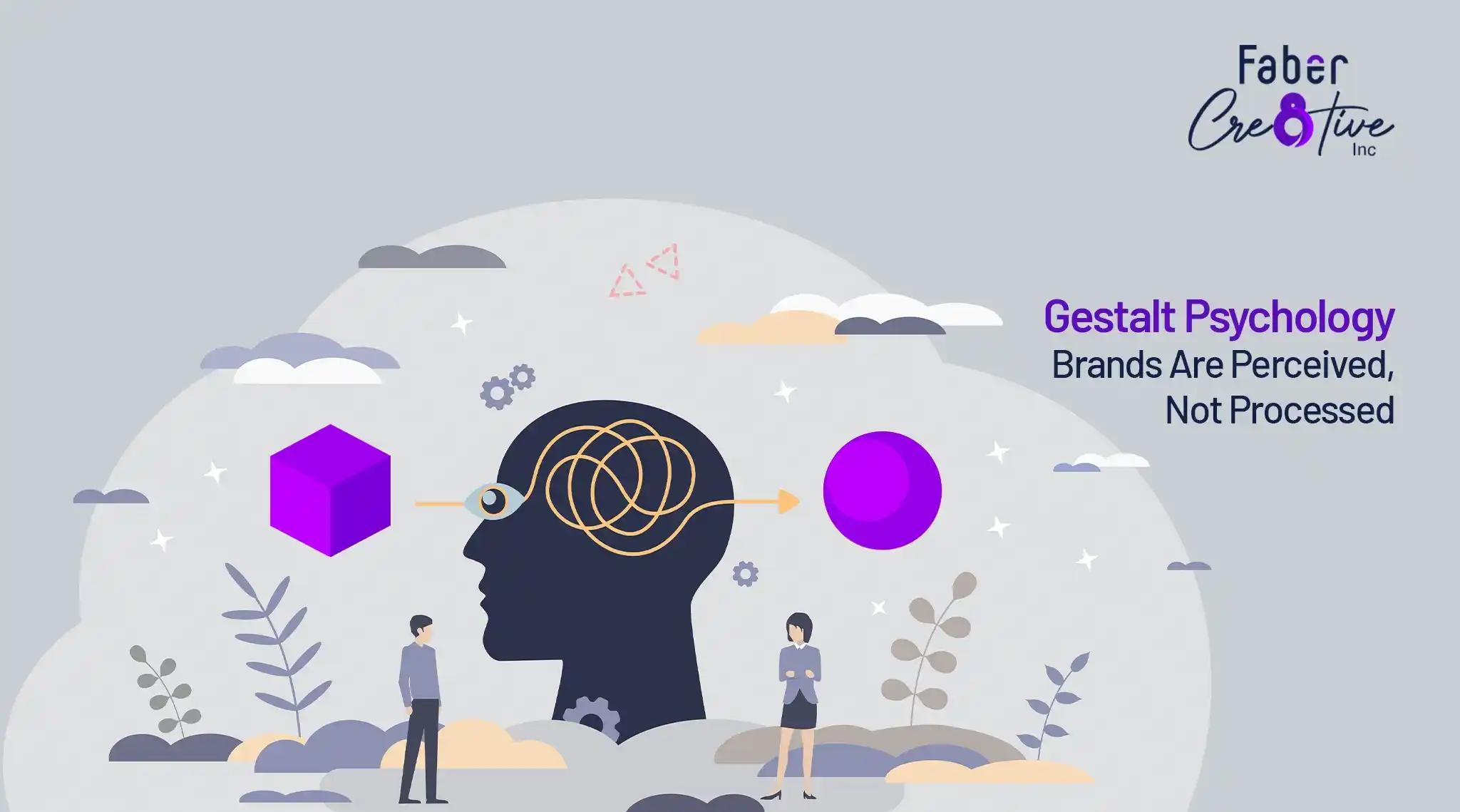
Rather, your brain immediately evaluates the overall impression: how it feels, its reliability and overall attitude of the brand. This isn’t magic. It is what is known as Gestalt Psychology!
The key concept is very basic but powerful, that an object is perceived as a whole rather than as separate parts. This is why in marketing, sometimes customers make a decision on a brand at the outset without noticing the detail.
If you’re a brand marketer, website owner or campaign investor, then knowing this rule will change the way you engage audiences and deliver results.
The Science Behind Instant Brand Impressions
Gestalt Psychology first appeared in the early 20th century and said that “the whole is greater than the sum of its parts.” It is human nature to look for patterns, closure, and simplicity in the world quickly. In today’s digital world, this deeply ingrained instinct comes into play in mere milliseconds.
People don’t “read the words and then look at the website; they don’t “look at the package and then read the words. When people see your brand, whether on your website home page, packaging, ads, or social post, they don’t read the words first, then look at the website. They are immersed in the whole picture: the whole identity.
Clean and modern design with uniformity of visuals and credible copy conveys professionalism and reliability. Even if the individual elements are good quality, a presentation that doesn’t align with the rest or is too disjointed can feel untrustworthy.
This overall vision is crucial as it can impact click-through rates, conversion rates, and even the decision to make a purchase. Customers don’t just buy products; they buy into the complete story, consistent branding that builds trust and the emotion a brand evokes.
Why Gestalt Matters for Modern Branding and Websites
Today, consumers have plenty of options. You have limited attention spans, and there is a lot of competition. When brands build a consistent understanding and distinctive identity, they resonate better.
Think about how you browse the Internet. Even if the information exists on the website, you may leave a site that has a feeling of disorganization because the overall feel of the site is not right. You may even be attracted to a brand that has a premium and deliberate look at each point of contact.
For Canadian businesses, using Gestalt principles helps build stronger emotional connections. It turns scattered marketing efforts into a unified presence that resonates and sticks in memory.
Key Gestalt Principles That Shape Brand Perception
Several core principles from Gestalt psychology directly apply to marketing and design:
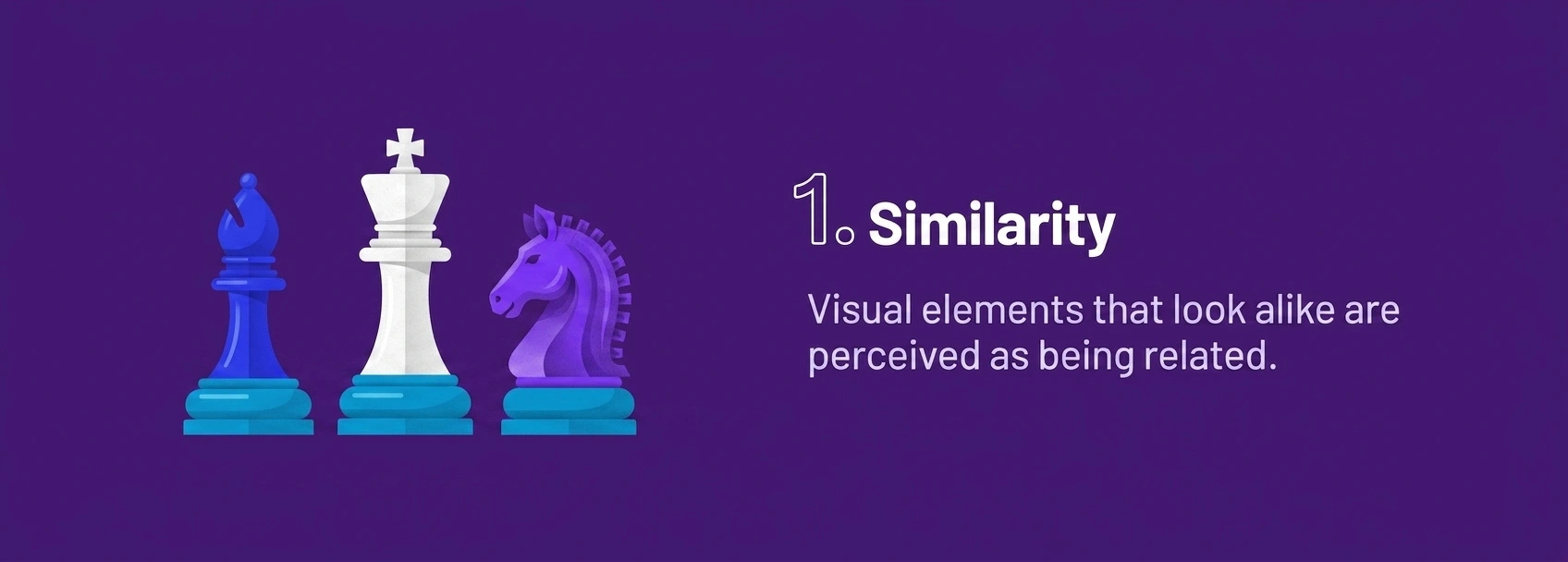
1. Similarity: We classify similar elements (colours, shapes, styles). Throughout your site and campaigns, use the same branded colours, icon designs and font styles to create a cohesive brand identity.
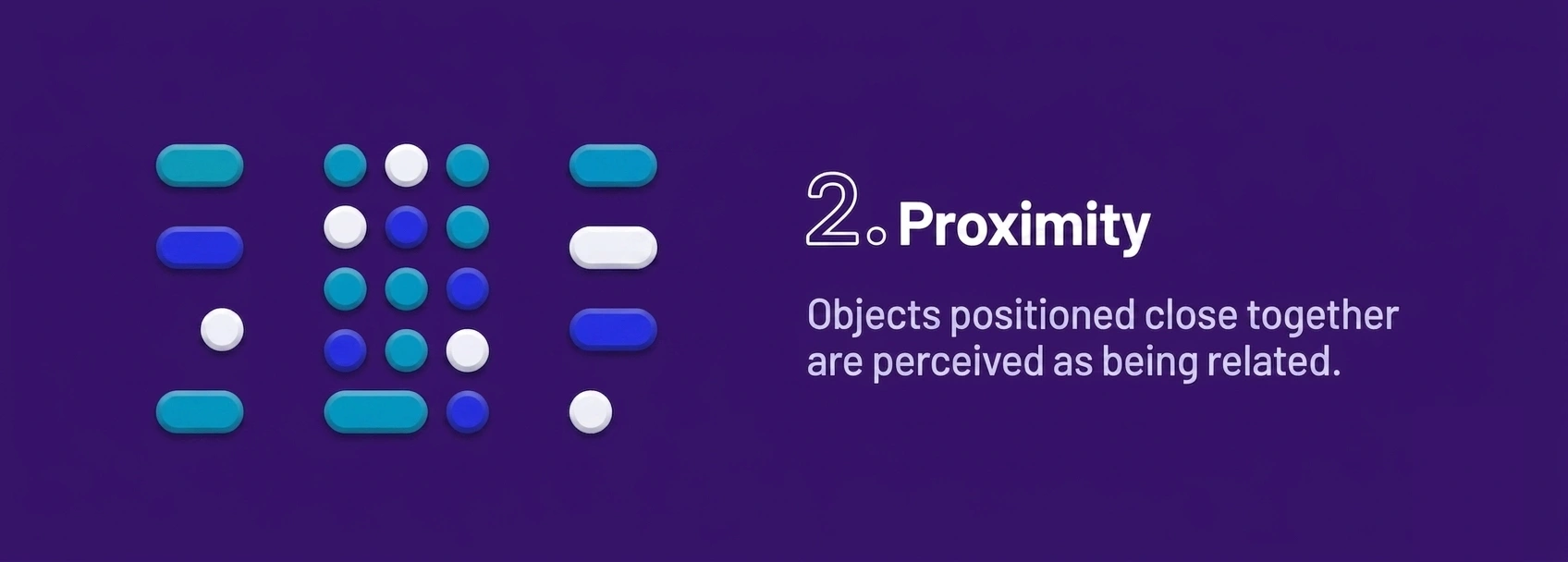
2. Proximity: Elements placed close together are perceived as related. On a website, grouping navigation items, related products, or testimonial blocks creates an intuitive flow and reduces cognitive load.
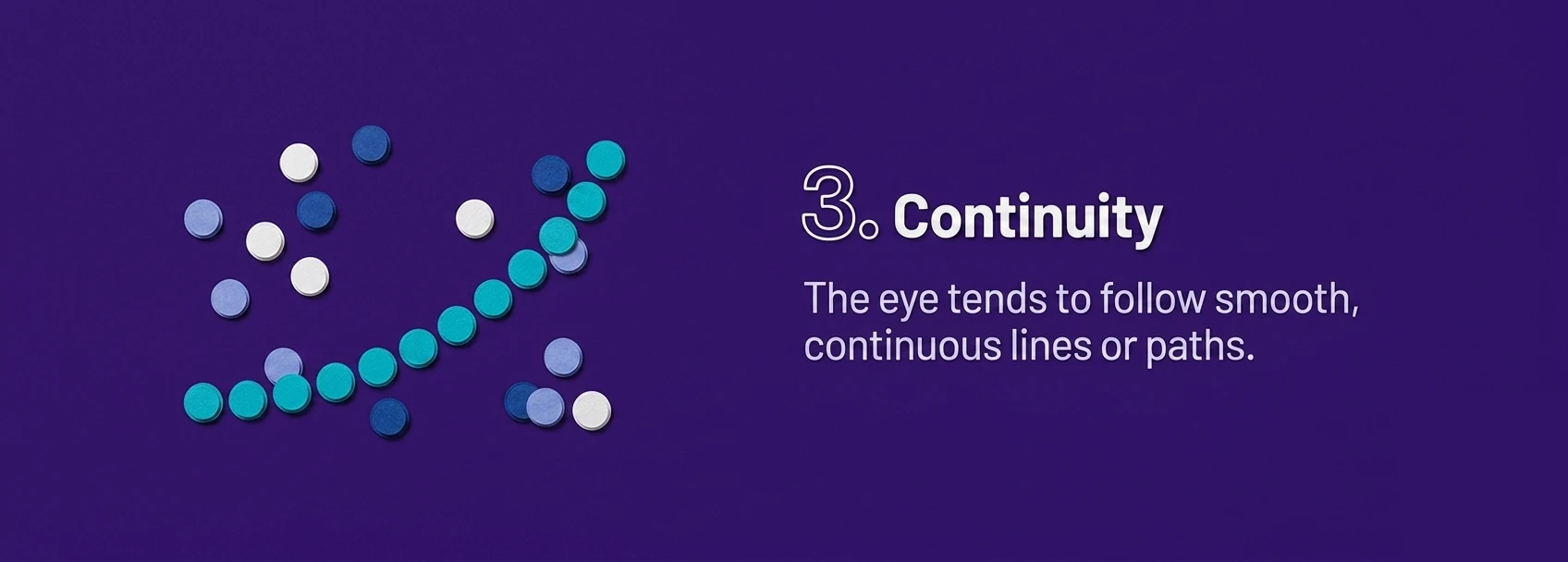
3. Continuity and Symmetry: Smooth lines and balanced designs guide the eye naturally and create a sense of order and professionalism.
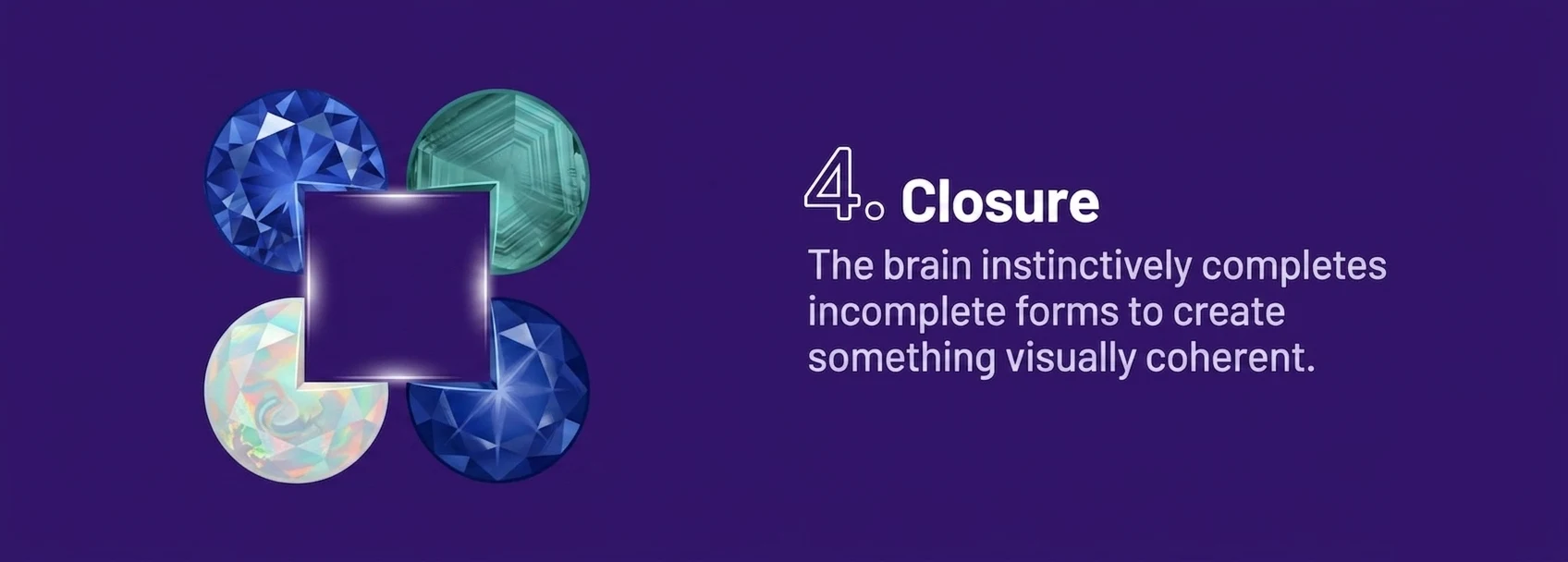
4. Closure: The brain connects information that is missing to create familiar forms or ideas. You can use the WWF panda or Apple’s bitten apple, which are both recognisable, and people will be able to fill in the rest of the picture themselves.
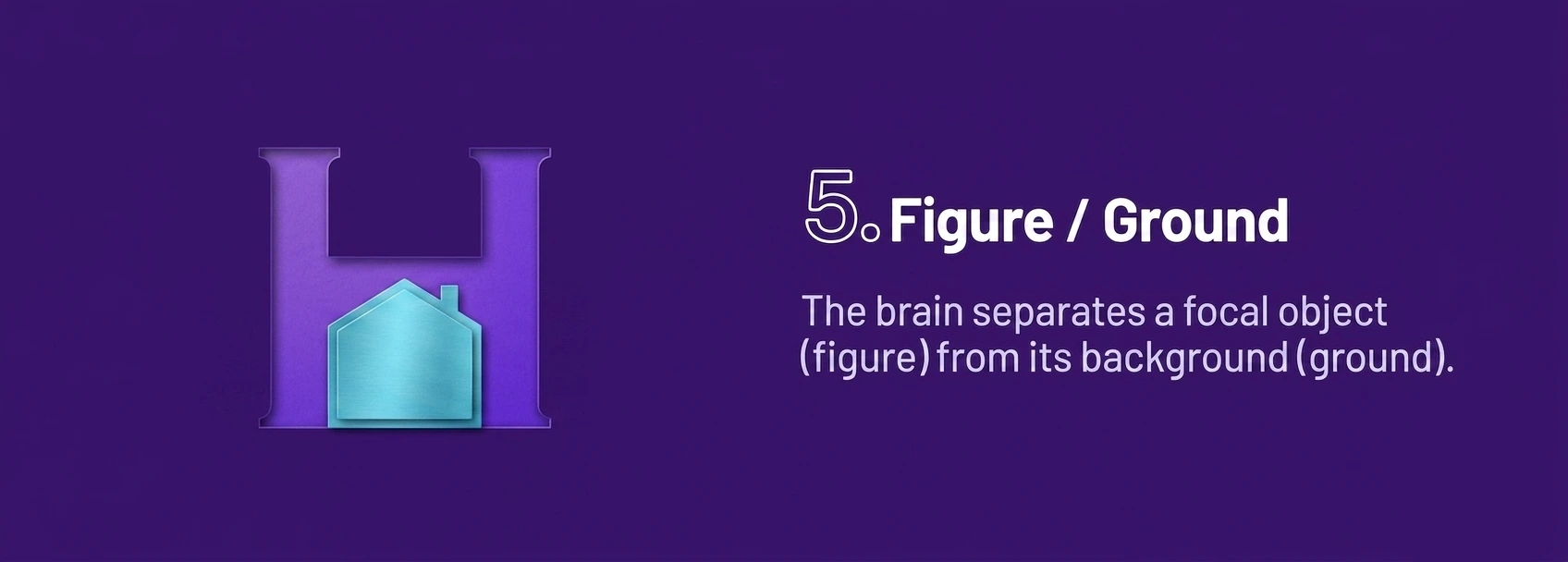
5. Figure-Ground: This is a principle that separates the foreground from the background of the composition. Contrast and focal points are beneficial to create a sense that key messages or calls to action jump off the page.
Common Challenges and Misconceptions
Lots of businesses pay a lot of attention to each individual asset, such as a good logo, a nice picture, and they don’t pay much attention to how these pieces fit together. The result? A disjointed brand image. Some prospects may be interested in some aspects but never reach a conclusion about the company. A second false belief is the notion of making design merely decorative.
But in fact, the right brand is a solution to business problems by psychological means, navigation, trust and decision making. Focusing on the whole picture results in increased recalls, bounce rates, and missed conversions. Smaller teams tend to have more problems with consistency, particularly when working with multiple freelancers or tools. It is at this point that strategic thinking is crucial.
Real-World Applications in Branding, Websites, and Campaigns
Suppose a professional services company wants to update its website. Applying Gestalt principles means making sure that the homepage hero section makes it clear what you know and what it’s worth, with a well-balanced layout, engaging images, and persuasive value props.
The proximity and similarity make navigation logical. Simple movements keep users from being overwhelmed. Ad campaigns that have a consistent visual language on all platforms increase recognition.
If a customer sees a product image on your page that matches their previous experience, they’ll instantly see a product that they are familiar with.
A brand, for example, could employ uniform product shoots with similar colour schemes and styles to recognize its products when a customer logs into an e-commerce platform. Even packaging and offline material benefits. A unified brand narrative, both online and offline, helps to establish loyalty and stand out in saturated markets.
We’ve observed how carefully applied concepts can raise the bar for our clients at agencies such as Faber Cre8tive, be it a polished corporate website or a lively campaign that resonates with viewers.
Whether it’s a chic company website or a catchy campaign that resonates with viewers, we have seen how intentional application of these concepts can elevate client results at agencies like Faber Cre8tive.
Bringing It All Together
In marketing, as in Gestalt psychology, details are important but only insofar as they help to create a stronger, more unified whole. Before customers closely examine you, they see your brand as one and trust, interest and loyalty are built accordingly.
This mindset enables companies to design impactful branding, user-friendly websites, and compelling campaigns that really connect with their target audience. Brands stand out in a world filled with so many distractions by telling a clear, cohesive story at any touch point. When assessing your brand, it’s time to consider the bigger picture if you feel like it isn’t coming together as a cohesive unit.
But with careful planning and innovative execution, a flawless whole can be created from the best parts.